Video Reviews
Best AI Video Editors and Video Makers
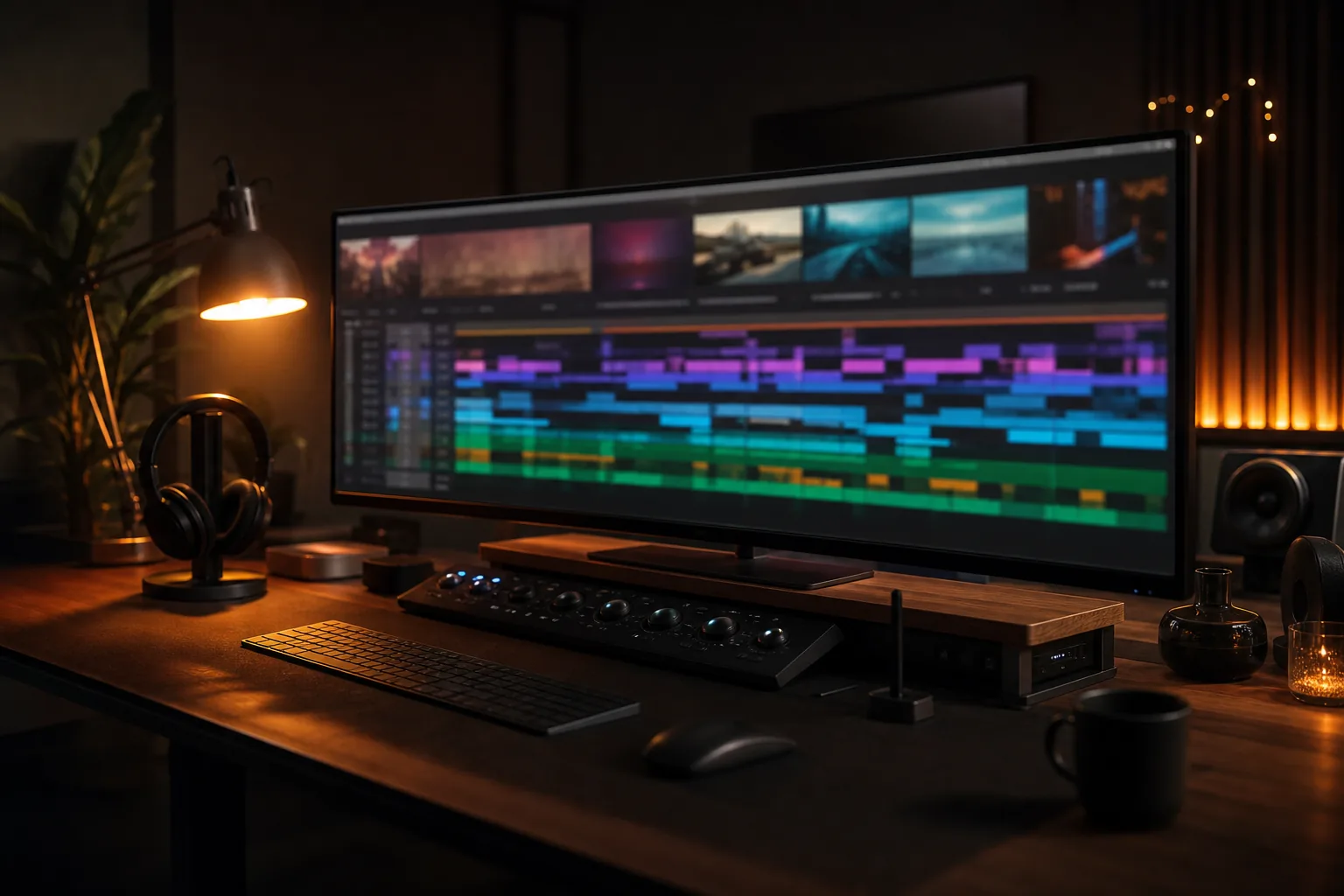
Most AI video tools promise to edit for you. After three weeks of cutting real projects in six of them, we can tell you which ones save time and which ones move the busywork around.
We fed every tool the same 4K H.264 clips from a mirrorless camera, a noisy low-light interview, and a 90-second short-form brief. We graded with LUTs, pushed keyframes, ran ripple edits across dense timelines, and compared exports at matched bitrates. Rankings weigh timeline control first, output quality second, and AI assists third.
If you are new to timelines, start with our video editing basics guide and come back. If your work is mostly stills, our AI photo editor reviews cover the other half of the desk. Here are the six worth installing in 2026.
The 6 best AI video editors
Cutwise AI
Best overallCutwise is the only tool here where AI assists sit inside a real timeline instead of replacing it. Scene detection cut our interview into usable selects at roughly 90 percent accuracy, and ripple edits are the cleanest we tested: delete a pause and every downstream clip, title, and keyframe moves with it. Generative extend added eight frames to a short clip without visible smearing.
Pros
- Ripple edits propagate through titles and keyframes
- Silence detection with adjustable thresholds
- Clean 10-bit H.265 exports up to 60 Mbps
Cons
- LUT import is .cube files only
- Music ducking still needs manual keyframes
Renderlane Studio
Best for colorRenderlane has the strongest shot matching we tested. Point it at a hero frame and it matches exposure and white balance across a multicam sequence in one pass, then lets you refine with wheels and curves. The built-in LUT library is tasteful and custom .cube files load fine. The tradeoff is speed: without proxies, 4K scrubbing stutters on older machines.
Pros
- One-pass shot matching across multicam clips
- Real scopes: waveform and vectorscope
- Tasteful built-in LUT library
Cons
- Needs proxies for smooth 4K playback
- Text and title tools feel like an afterthought
Framecraft One
Best for short-formFramecraft auto-reframes 16:9 masters to 9:16 and 1:1 with subject tracking that survives fast pans, and its caption engine nailed 97 percent of words in our noisy interview test. Template pacing runs aggressive, so loosen the default cuts.
Pros
- Reliable auto-reframe for vertical video
- Best caption accuracy in the test group
- Platform-tuned export presets
Cons
- Templates cut too fast by default
- No multitrack audio mixing
Motionbloom
Best text-to-video makerType a script, pick a visual style, and Motionbloom builds a storyboard of generated clips you can swap, trim, and re-grade. Motion stays coherent for about six seconds per clip, then faces drift. Treat it as b-roll generation, not a finished-video button.
Pros
- Script-to-storyboard workflow stays editable
- Consistent visual style across generated clips
- Easy per-clip regeneration
Cons
- Clips degrade past six seconds
- Exports capped at 1080p on the base plan
Clipforge Pro
Best for teamsClipforge is the only tool here with real shared projects: comment markers pinned to timecode, version stacks, and an approval state per sequence. The AI features are modest, but nothing else let three people touch one timeline without chaos.
Pros
- Timecode-pinned comments and approvals
- Solid browser playback of 4K proxies
- Version history per sequence
Cons
- AI assists lag the rest of this list
- Subscription only, no perpetual license
Storydeck AI
Best budget optionStorydeck costs about half of everything else here and cuts corners in the right places. The timeline is simple but honest, noise reduction on our ISO 12800 clip was second only to Renderlane, and exports are clean if slow. You give up 4K output, masking, and motion tracking.
Pros
- Half the price of the rest of the list
- Surprisingly good noise reduction
- Simple timeline with no gimmicks
Cons
- 1080p export ceiling
- No masking or motion tracking
How they compare
| Tool | Best for | Standout feature | Price tier | Rating |
|---|---|---|---|---|
| Cutwise AI | Overall | Ripple-safe AI assists | $$ | 4.8 |
| Renderlane Studio | Color grading | One-pass shot matching | $$$ | 4.6 |
| Framecraft One | Short-form | Auto-reframe plus captions | $$ | 4.5 |
| Motionbloom | Text-to-video | Script-to-storyboard | $$ | 4.1 |
| Clipforge Pro | Teams | Timecode comments | $$$ | 4.0 |
| Storydeck AI | Budget | Noise reduction | $ | 3.9 |
Frequently asked questions
Can an AI video editor replace manual editing?
No, and the good ones do not try. They handle selects, captions, silence removal, and reframing. Pacing and the final grade are still yours.
What export bitrate should I use?
Match your source frame rate, then H.264 at 16 to 24 Mbps for 1080p or 35 to 45 Mbps for 4K. H.265 reaches similar quality at half those numbers.
Do these tools handle LOG or RAW footage?
Cutwise and Renderlane ingest LOG properly with a color-managed pipeline. The rest expect Rec.709 and will clip flat footage. None of the six read cinema RAW formats.
Are the free tiers good enough to start with?
For learning, yes. Framecraft and Storydeck allow real projects on free plans, but expect watermarks or 720p caps. Once you publish weekly, the paid tiers pay for themselves.
We retest after every major update. If a ranking moves, this page moves with it.